
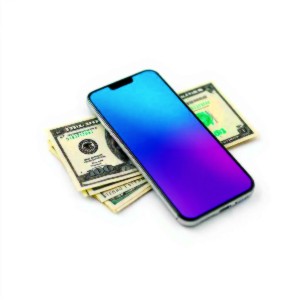
We live in a world where your phone can pay your bills, transfer money, and even invest for you before you’ve finished your coffee. Digital banking has rewritten the rules of money management. It’s fast, convenient, and frictionless; so much so that many people haven’t held more than a few crumpled bills in years.
However, as the world increasingly relies on digital financial systems, something peculiar occurs: the physical sense of money begins to fade. You no longer feel what you spend. The swipe of a card or tap of a phone doesn’t sting the same way that handing over hard-earned cash does.
This isn’t a paranoid rant against progress. Digital banking is brilliant in many ways. However, like all technology, it comes with trade-offs that warrant an honest examination. Especially if we care about independence, security, and self-awareness.
The Rise of Digital Banking: How We Got Here
The shift toward digital banking was inevitable. The internet made it easier to manage money, and smartphones put banks in our pockets. What used to require a visit to a teller now takes seconds through an app.
Then came online-only “neobanks,” like Chime, Revolut, and Monzo. No physical branches, no paper statements, just clean interfaces and instant notifications. Traditional banks scrambled to catch up, launching their own digital platforms, often full of bells and whistles to keep us clicking.
The pandemic accelerated everything. Physical cash suddenly looked “dirty.” ATMs gathered dust, and contactless payments became the norm. Now, digital banking isn’t the future it’s the default.
But the faster we move, the less time we spend thinking about what we might be giving up in the process.
The Pros of Digital Banking
Let’s start with the obvious upside. Digital banking has made managing money easier than ever.
1. Convenience That’s Hard to Beat
You can open an account, deposit checks, transfer funds, and pay bills all from your phone, no lines, no hours of operation, no small talk with a teller. You can even freeze your card instantly if it’s lost, something that would’ve taken days in the past.
2. Real-Time Awareness
Digital banks make spending visible. You see transactions instantly, get alerts for unusual activity, and can track patterns that help manage your budget. This transparency can be powerful if you use it consciously.
3. Better Access for the Underserved
For people in rural areas or without transportation, online banking is a lifeline. All you need is an internet connection, not a nearby branch. Many digital banks also skip the fees that punish those living paycheck to paycheck.
4. Lower Fees, Higher Efficiency
With fewer overhead costs (no buildings, fewer employees), many digital banks offer better interest rates and fewer fees. They can pass on savings that traditional banks simply can’t afford.
5. Global Mobility
For travelers and freelancers, digital banking means you can move money across borders with minimal hassle. You’re no longer bound by geography or paper checks.
Digital banking works. It’s efficient, fast, and accessible. But it’s also built on infrastructure that depends on systems beyond your control. And that’s where the cracks start to show.
The Cons of Digital Banking
As seamless as it seems, the digital financial world hides vulnerabilities. Some technical, others psychological.
1. Vulnerability to Cyberattacks and Outages
Hackers don’t need crowbars or masks; they need code. Banks are constant targets for cyberattacks, and while protections are strong, no system is bulletproof. Outages also happen. When your money lives behind a login, you’re one glitch or breach away from being locked out of your own funds.
2. Privacy and Data Tracking
Every digital transaction leaves a footprint. Where you shop, what you buy, how often you spend, it’s all data. And that data is gold to advertisers, lenders, and institutions. Your financial habits tell a detailed story about your life, one you may not want others to read.
3. Dependency on Technology
Lose your phone, forget your password, or have your account flagged by an algorithm, and suddenly your “easy access” disappears. The more digital your finances, the less control you have when tech fails, or when someone decides you violated some obscure policy.
4. Invisible Spending
Studies consistently show that people spend more when using cards or apps instead of cash. The reason is simple: there’s no emotional friction. A swipe doesn’t hurt. Handing over a $20 bill does. The disconnection between money and touch is one of digital banking’s most subtle downsides.
5. The Risk of Financial Overreach
With everything online, it’s easier for institutions or governments to freeze assets, track transactions, or impose limits. It sounds dystopian, but it’s already happening in parts of the world. Cash offers a level of autonomy that no app can replicate.
6. Erosion of Financial Intuition
When you never physically handle your money, you lose touch with its value. Budgeting becomes theoretical. People rely on apps to tell them how much they’ve spent instead of feeling it. Over time, this dulls financial instinct.
The Case for Cash: Staying Grounded in a Digital Age
Cash is slow, inconvenient, and beautifully human. It forces mindfulness. You see it, touch it, count it, and part with it deliberately. There’s something powerful about that physical connection.
Here’s why it’s still worth holding onto cash, literally.
1. Privacy and Independence
Cash transactions leave no digital trail. No algorithms analyzing your habits, no companies tracking your location, no digital record of every coffee you buy. It’s anonymous by nature, and that’s not about hiding—it’s about preserving a basic human right to privacy.
2. Budgeting Discipline
Cash introduces natural limits. You can’t overspend what you don’t have in your wallet. That constraint builds discipline in a way that apps and credit cards can’t replicate. It’s tactile accountability.
3. Resilience in Emergencies
When systems go down, power outages, internet failures, card reader malfunctions, cash still works. It’s the ultimate backup plan in a world built on fragile networks.
4. Support for Local Economies
Small businesses often lose money to card transaction fees. Paying in cash keeps more money in the hands of local owners and strengthens community economies. It’s an act of quiet rebellion against financial intermediaries taking their cut of every transaction.
5. Mental Connection to Value
Using cash changes how you perceive spending. A $100 bill feels more valuable than seeing “$100” on a screen. You hesitate, weigh the choice, maybe even decide to wait. That awareness keeps financial habits grounded in reality.
The Balance: Blending Digital Ease with Cash Wisdom
The point isn’t to reject digital banking, it’s to use it consciously. There’s no virtue in being a financial hermit. The key is to blend the efficiency of digital with the wisdom of analog.
Here’s what that balance looks like in practice:
- Keep a cash reserve: A few hundred dollars tucked away at home isn’t paranoia, it’s preparedness.
- Use cash for daily expenses: Groceries, dining, and entertainment. Feel the exchange. It’ll reshape your sense of spending.
- Use digital for automation: Bills, savings, transfers—these are areas where digital banking shines.
- Protect your data: Use privacy settings, two-factor authentication, and banks with solid cybersecurity reputations.
- Be skeptical of “frictionless”: The more effortless something feels, the easier it is to lose awareness. A little friction isn’t bad; it’s what keeps us conscious.
The Future: Will Cash Disappear?
Governments and corporations are already pushing for cashless societies. It’s more efficient to track, tax, and regulate. Sweden and South Korea are nearly cashless. Central Bank Digital Currencies (CBDCs) are on the horizon. State-controlled digital money that could, in theory, expire, be restricted, or monitored.
That’s not science fiction. It’s a policy discussion. It makes the simple act of holding physical cash a quiet act of independence.
The irony is that digital banking’s success depends on something ancient: trust. We trust that our money exists, that the app balance is real, and that the system will honor our transactions. But trust without transparency is fragile. Cash, for all its flaws, needs no such faith. When it’s in your hand, it’s real.
Closing Thoughts
Digital banking is a marvel of modern convenience. It has opened doors for millions and streamlined life in remarkable ways. But convenience always has a cost; sometimes in privacy, sometimes in autonomy, and sometimes in awareness.
Using cash isn’t about rejecting progress. It’s about remembering that money, at its core, is a tool—not just a number on a screen. When you handle cash, you reconnect with the weight of your choices. When you depend entirely on digital systems, you give up a small piece of control, often without realizing it.
The smartest path forward isn’t all or nothing, it’s balance.
Use the tools of the future, but keep one hand on the past.
Because the day might come when that $20 bill in your pocket is worth more than any number glowing on your screen.
Discover more from To Forge A Man
Subscribe to get the latest posts sent to your email.

